
How to Inject Peptides: A Complete Guide
Peptide injections have become increasingly discussed in areas such as metabolic health, hormone related treatment, research, and wellness. However, injecting a peptide is not simply a matter of using a syringe and following an online dosage chart. The correct product, route of administration, preparation, storage, and medical supervision all matter.
This complete guide explains what you should know about peptide injections, how injectable peptides (Alluvi pens and Synedica) are generally administered, and the important safety considerations to understand before treatment.
What Are Peptides?
Peptides are short chains of amino acids that occur naturally in the body and participate in numerous biological processes. Some peptides are used as medicines, while others are investigated for research purposes.
Examples of medically used peptide based medicines include certain treatments for diabetes and obesity. Other products marketed online as peptides may not be approved medicines and may have limited evidence regarding their safety, quality, purity, or effectiveness.
Because different peptides behave differently in the body, there is no universal injection method or dosage that applies to every peptide.
Why Are Some Peptides Injected?
Some peptide medicines are administered by injection because the digestive system can break down certain peptide molecules before they can produce their intended effect.
Depending on the specific medicine, injections may be administered subcutaneously or by another route determined by the product’s prescribing information.
The appropriate route depends entirely on the individual product. A peptide intended for subcutaneous administration should not automatically be injected intravenously or intramuscularly.
Before Injecting a Peptide
Before using an injectable peptide, confirm the following:
1. Identify the exact product
Know the active ingredient, strength, formulation, manufacturer, and expiration date. Avoid using products with unclear labeling or unknown sources.
2. Confirm that it is appropriate for you
Prescription peptide medicines should be used according to the instructions provided by your healthcare professional. Your medical history, existing medicines, allergies, and other health factors can affect whether a particular treatment is appropriate.
3. Understand the prescribed dose
Do not calculate or change your dose based on social media posts, online forums, or another person’s treatment schedule.
4. Check storage requirements
Many peptide medicines have specific temperature and light requirements. Follow the manufacturer’s instructions or the instructions provided by your pharmacist.
5. Use sterile equipment
Never reuse needles or share injection equipment. Sterile, single use equipment helps reduce the risk of infection and other complications.
Common Injection Sites
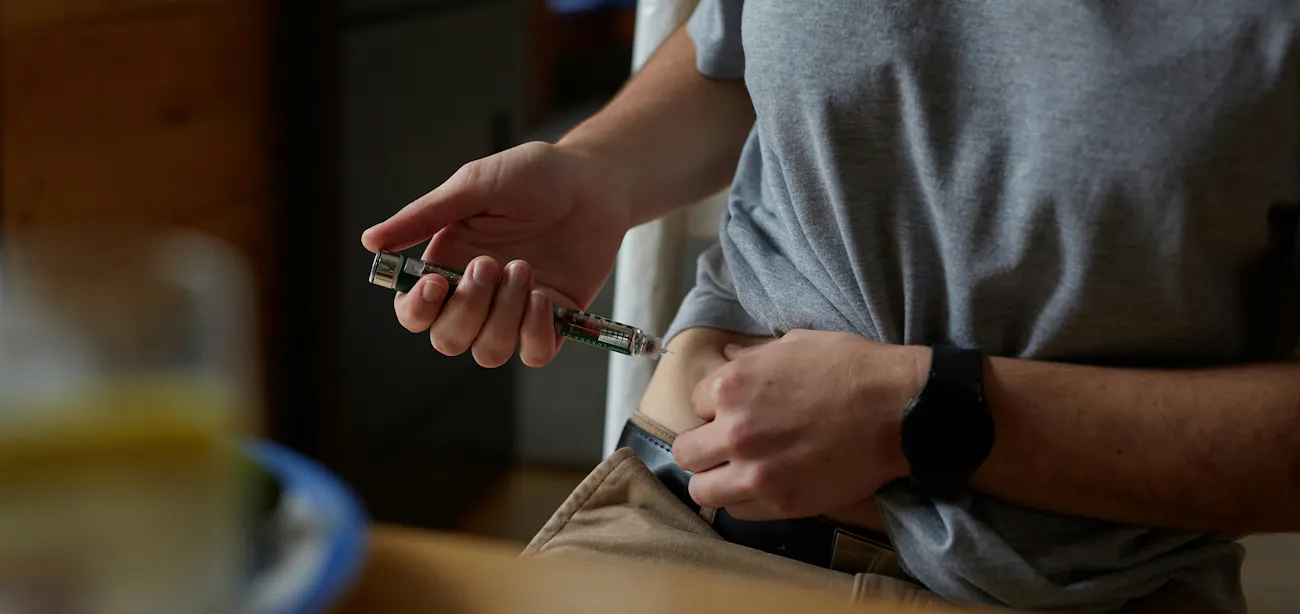
For medicines specifically prescribed for subcutaneous injection, the abdomen, thigh, or upper arm may be used depending on the medication’s instructions.
Injection sites should be rotated rather than repeatedly using exactly the same location. Avoid injecting into skin that is irritated, bruised, swollen, infected, or damaged.
Your healthcare professional or pharmacist should demonstrate the appropriate injection technique for your particular medication.
General Steps for Safe Injection
The exact procedure varies between products, so the official instructions supplied with your medicine should always take priority.
Generally, safe administration involves preparing a clean area, washing your hands, checking the medication and expiration date, using new sterile equipment, selecting an appropriate injection site, administering the medicine according to the prescribed instructions, and disposing of the needle immediately in an appropriate sharps container.
Do not improvise preparation methods or attempt to modify a peptide formulation.
If your peptide requires mixing or reconstitution before injection, do not assume that instructions for another peptide apply. Different products can have completely different preparation requirements.
What Should You Do After an Injection?
Monitor the injection site and pay attention to how you feel after administration.
Mild temporary discomfort, redness, or irritation can occur with some injections. However, significant swelling, increasing pain, warmth, pus, fever, difficulty breathing, facial swelling, severe dizziness, or other concerning symptoms require prompt medical attention.
Seek emergency medical care if you experience symptoms suggesting a severe allergic reaction, such as difficulty breathing, swelling of the lips or throat, or loss of consciousness.
Common Mistakes to Avoid
Several mistakes can increase the risk associated with peptide injections.
Do not use an unidentified peptide simply because it is advertised online. Do not use someone else’s prescription. Do not increase the dose because you believe a larger amount will produce faster results. Do not reuse needles. Do not share injection equipment. Do not inject a product through a route that differs from its approved or prescribed route.
You should also avoid relying exclusively on online dosage calculators because concentration, formulation, and syringe markings can vary.
What About Peptides Sold for Research Use?
Extra caution is necessary with products labeled “research use only.”
A research chemical is not automatically suitable for human administration. Products purchased from unverified websites may have uncertain identity, concentration, sterility, or contamination risks.
The fact that a product is sold as a peptide does not establish that it is safe or approved for human use.
How Often Should Peptides Be Injected?
There is no universal peptide injection schedule.
Some prescription peptide medicines are administered daily, while others may be administered weekly or according to another schedule. The appropriate frequency depends on the specific active ingredient, formulation, indication, and prescribing instructions.
Never copy another person’s injection schedule.
Frequently Asked Questions
Can I inject peptides myself?
Some prescription injectable medicines are specifically designed for self administration after a healthcare professional has provided appropriate instructions. Whether self injection is suitable depends on the particular medicine and your circumstances.
Where should peptide injections be administered?
The appropriate injection site depends on the medicine and its approved route. For certain subcutaneous medicines, areas such as the abdomen, thigh, or upper arm may be used. Follow the product instructions provided by your healthcare professional.
Can all peptides be injected?
No. Peptides differ substantially in formulation, stability, route of administration, and intended use. Never assume that one peptide can be administered in the same way as another.
Do peptide injections hurt?
Injection discomfort varies between individuals and products. Some people experience little discomfort, while others may notice temporary stinging, tenderness, or irritation.
Can I mix peptides together?
Do not mix different peptide medicines unless a qualified healthcare professional or the official product instructions specifically state that they can be combined. Compatibility and stability cannot be assumed.
What should I do if I miss an injection?
Do not automatically double the next dose. Check the medication’s official instructions or contact your healthcare professional or pharmacist for advice about a missed dose.
The Bottom Line
Learning how to inject peptides safely begins with understanding that there is no single injection procedure suitable for every peptide. The medication, formulation, route, dosage, storage requirements, and individual health circumstances all matter.
If you have been prescribed an injectable peptide, follow the instructions provided by your healthcare professional and the official medication information. If you are considering a peptide purchased online, especially a product labeled for research use, speak with a qualified healthcare professional before using it.
Safe peptide treatment is not about finding the fastest injection method. It is about using an appropriate, properly identified product correctly and under appropriate medical guidance.