
What Are Peptides? A Complete Guide to Understanding These Molecules
Peptides show up constantly in research literature, wellness discussions, and increasingly in everyday conversation — but a lot of people still aren’t sure exactly what they are or why scientists find them so interesting. This guide breaks down the basics in plain language.
What Is a Peptide, Exactly?
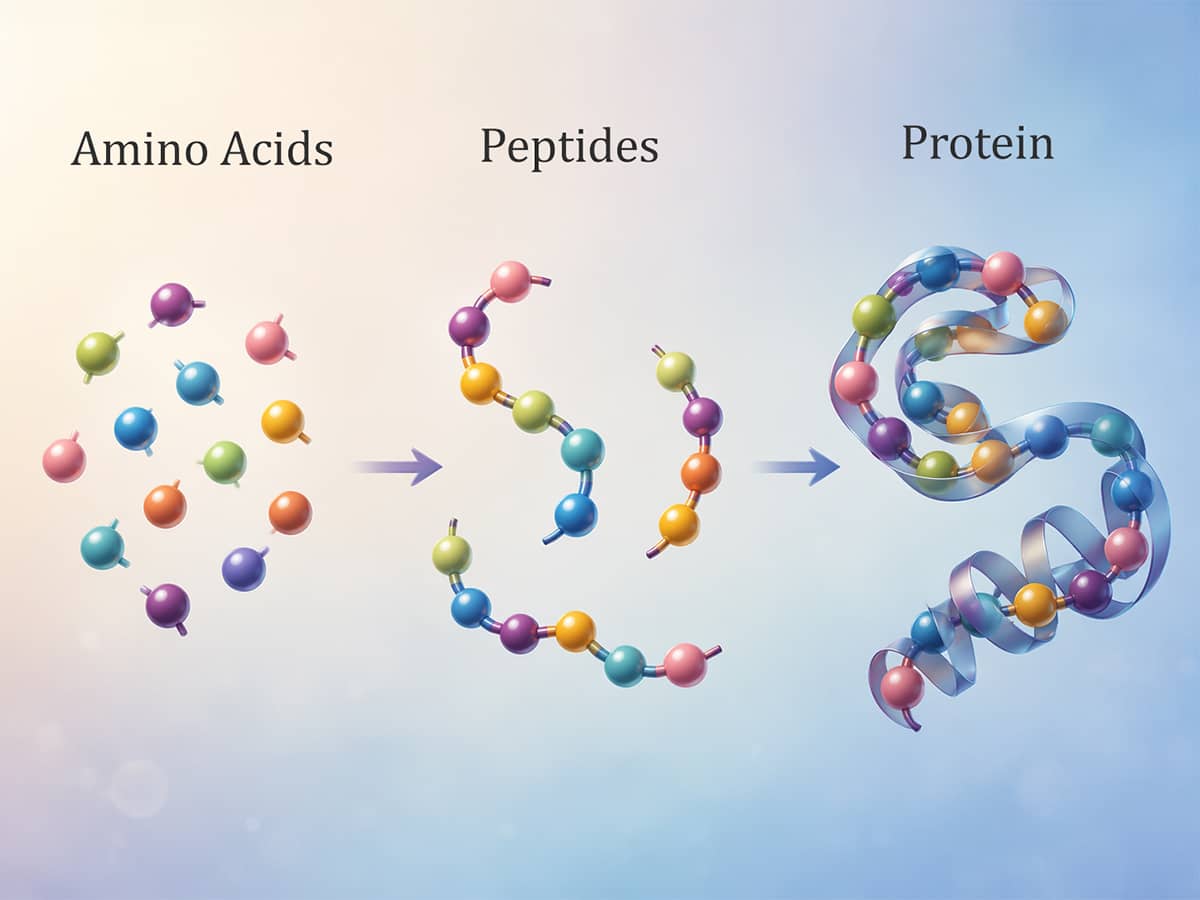
A peptide is simply a short chain of amino acids linked together. Amino acids are often called the “building blocks of protein,” and when a small number of them (generally somewhere between 2 and 50) bond together, the resulting chain is classified as a peptide rather than a full protein. Once that chain grows much longer and folds into a complex 3D structure, it’s typically referred to as a protein instead.
This size distinction matters because it affects how a peptide behaves. Shorter chains tend to be more targeted in what they interact with at a molecular level, which is part of why researchers find certain peptides so useful for studying specific biological pathways.
Where Do Peptides Come From?
Peptides can be found naturally throughout the human body and in other living organisms. Insulin, for example, is a well-known peptide hormone. Outside the body, peptides are typically produced in one of two ways:
- Synthesis in a lab, where amino acids are chemically linked together in a specific, controlled sequence
- Extraction or derivation from biological sources, which is less common today for research-grade material due to cost and consistency issues
Lab synthesis is now the standard approach for producing research peptides because it allows for precise control over purity and sequence accuracy.
Categories of Peptides Commonly Discussed in Research
There isn’t just one “type” of peptide — the category is broad. Some of the ways researchers group them include:
- Signaling peptides, which interact with receptors to influence cellular processes
- Structural peptides, which contribute to the physical architecture of tissues
- Transport peptides, which help move other molecules across cell membranes
- Defense-related peptides, which are studied for their role in immune-related processes
Within these broad categories, individual peptides from brands such as Alluvi peptide and Synedica peptide are usually studied for narrow, specific research questions rather than broad claims — this is a rapidly evolving area of science, and much of the research remains preclinical or early-stage.
Why Purity and Sourcing Matter
Because peptides are potent even in very small amounts, the quality of the material used in any research setting is critical. Impurities, incorrect sequences, or degraded product can all significantly affect research outcomes and are difficult to detect without proper lab testing. This is one of the main reasons third-party testing and certificates of analysis (COAs) have become a standard expectation when sourcing peptides for legitimate research purposes.
An Important Note on Use
Peptides sold for research purposes are intended for laboratory and research use, not for human or animal consumption. Any decisions about administering a substance to a person should only be made by a licensed medical professional, using an approved product and appropriate medical guidance. This guide is educational in nature and isn’t a substitute for professional medical or scientific advice.
The Bottom Line
Peptides are short amino acid chains that play an enormous range of roles in biology, from cell signaling to structural support. Their small size and specificity make them a major focus of ongoing scientific research — but that same potency is exactly why sourcing, purity, and proper handling deserve serious attention. Understanding the basics helps make sense of why the research community puts so much emphasis on quality control in this space.